



One-Stop Sourcing That Protects Every dB of Your Budget
Introduction: The 3 Hidden Culprits Behind Project Delays
In FTTH/FTTx deployments and enterprise campus all-optical networks (POL), project delays and cost overruns rarely stem from choosing the "wrong" backbone cable. More often, they trace back to three overlooked details:
incomplete BOMs (missing adapters, pigtails, distribution boxes, or waterproof closures on-site),
incompatibility between components from different suppliers (mechanical tolerance issues causing sudden insertion loss spikes)
chaotic lead times from fragmented sourcing (five suppliers, five purchase orders, five sets of customs documents—management costs quickly eclipse any per-unit savings).
A reliable network always starts with a complete, specification-aligned material package.
I. Backbone Cables: Choose Right, or Regret It on Site
Selecting the wrong backbone cable can leave your installation crew stuck on-site or, worse, force a costly rework right after deployment. LinkFiberPro offers a full range of outdoor cables, matched to your deployment scenario:
ADSS (All-Dielectric Self-Supporting): Metal-free construction, specifically designed for high-voltage power pole environments where electromagnetic interference is a concern.
GYXTW(Central Loose Tube Light-Armored): Lightweight and flexible. A cost-effective choice for small-fiber-count projects (≤12 cores), suitable for both aerial and duct deployment.
GYTA (Layer-Stranded Aluminum-Laminated Tape Armored): Aluminum-laminated tape provides superior moisture protection. The go-to workhorse for duct and general aerial installations—also a favorite in telecom operator tenders.
GYTC8S (Figure-8 Self-Supporting): Comes with an integrated steel messenger wire—aerial installation without the need for separate messenger strand. The preferred choice for rural and suburban access networks.
When sourcing, focus on just three metrics: low attenuation, adequate tensile strength, and proper waterproofing. A shortfall in any of these will inevitably show up later as trouble tickets and customer complaints. All LinkFiberPro backbone cables undergo 100% attenuation and tensile verification before shipment, ensuring every meter you receive is field-ready.
II. The Hidden Compatibility Traps in Every Connection Point
Multi-Sourcing Causes Micron-Level "Tolerance Stack-Up" – Forced Installation Damages Equipment, Acceptance Testing Fails with High Loss
You buy splitters from Supplier A, patch cords from Supplier B, and distribution boxes from Supplier C. Each product's test report looks fine – on paper. But when they arrive on-site, problems start piling up:
Problem 1: End-users experience frequent dropouts right after service activation. On-site optical power readings simply won't meet specifications. There are only a few splices, yet loss just won't come down. The crew swaps patch cords, re-splices connectors – days of delay before they finally trace the root cause: components from different manufacturers. The adapter's ceramic sleeve and the patch cord ferrule have micron-level tolerance misalignment, with subtle mismatch in end-face polishing parameters. This is "tolerance stack-up" caused by fragmented sourcing – each component passes QC individually, but fails when put together.
Problem 2: Physical structures don't match. The splitter won't seat into the distribution box – the mounting slots are misaligned. The crew can't force it in without risking fiber breakage. The only option: stop work and wait for replacement parts from the supplier. Every day of downtime costs $500 in labor and equipment rental.
LinkFiberPro's One-Stop Solution:
This is precisely the value of manufacturing our core components in-house. In the entire FTTH link, the most connection-dense and precision-critical components –patch cords, pigtails, splitters, and adapters– are all produced by us, delivered as one integrated package.
They leave our factory with fully unified mechanical tolerances and polishing parameters – no "Supplier A vs. Supplier B" tolerance stack-up. APC (green, angled-polish) and UPC (blue, flat-polish) are strictly segregated at the source, eliminating on-site mix-ups. For distribution boxes and terminal boxes– though sourced externally – we lock in mounting slot specifications and adapter types during the engineering phase. Before shipment, 100% physical fit and insertion testing is completed in-house, ensuring that when the shipment arrives, your crew can assemble everything easier with good performance.
Beyond the distribution point, the final drop cable matters equally. Our G.657.A2 bend-insensitive fiber Drop Cable tolerates tight bends down to 7.5mm radius without light leakage. Whether for residential drop, enterprise office access, or outdoor surveillance connections, you can finally say goodbye to intermittent network outages and the support nightmare they bring.
Others sell you "a pile of parts." We deliver "a system whose compatibility has been verified before it leaves our factory."
III. Construction & Testing Tool: Wrong Tools = Wasted Man-Hours
Construction efficiency directly determines project profitability. A low-precision fusion splicer means a single high-loss splice forces a re-splice—wasting both time and materials. Skipping cleaning tools before connector mating means dust on the ferrule end-face sends insertion loss through the roof. LinkFiberPro supplies a complete toolkit: from Miller strippers (for precise coating removal) and fiber cleaning kits (cleaning pens/lint-free wipes) to high-precision core-alignment fusion splicers—helping your crew get it right the first time. No rework is the biggest cost saver you'll ever find.
For testing, Optical Power Meters (OPM) and Visual Fault Locators (VFL) are the essentials for field verification as you go. We strongly recommend adding a PON-OTDR-capable OTDR (with 1625nm/1650nm out-of-band test wavelengths) that can penetrate the splitter to pinpoint issues on individual drop fibers—so you don't have to wait for a subscriber's complaint to know something's wrong. Test as you build, and you're ready to hand over as soon as the work is done—the time you save on rework goes straight to your bottom line.
LinkFiberPro's one-stop material solutions are widely applicable to the following project scenarios:
Telecommunication: FTTH / FTTB / FTTC broadband network construction.
Campus & Enterprise: All-optical networks for schools, factories, and resorts.
Smart City: Urban road video surveillance and low-voltage security cabling.
Power Utility: ADSS transmission communication links along power poles.
IV. LinkFiberPro One-Stop Value: One Order, One Shipment, Zero Headaches
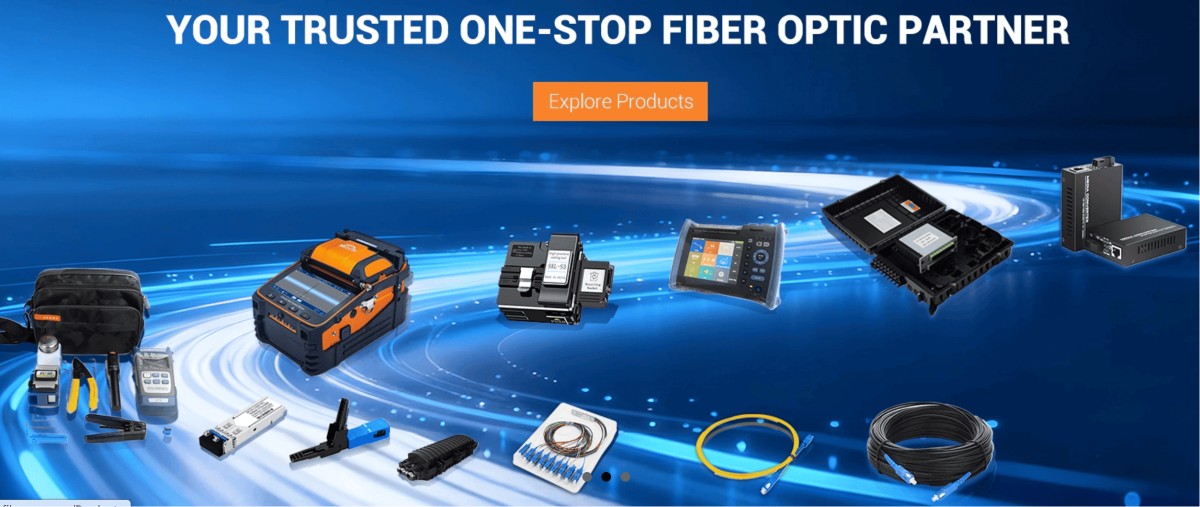
You don't need to chase five suppliers for five purchase orders, coordinate five different lead times, or wrestle with five sets of customs clearance documents. LinkFiberPro leverages our coordinated manufacturing bases in Ningbo and Guangzhou to deliver a complete product portfolio—covering backbone cables, distribution boxes, optical splitters, patch cords, fusion splicers, OTDRs, cleaning tools, and more. All products are spec-aligned and mechanically matched before shipment. One order, one set of customs documents, one consolidated shipment—dramatically reducing your procurement management and logistics costs.
Your job is to win projects and execute deployments in your local market. Let us handle the complete material chain that protects your schedule and your margins.
Profit in any fiber access network or private network project is never "pinched" from individual component prices. It's "saved" through an efficient, integrated supply chain that delivers completeness and compatibility—pre-verified before shipment, not pieced together on-site. Send us your BOM, and leave the rest to us.
Note: User-side opto-electronic conversion and access devices (ONU/ONT terminals or fiber media converters) are also available upon request.
LinkFiberPro—From the OLT to the ONT, One-Stop Sourcing That Protects Every dB of Your Budget.
See a real case: how our one-stop solution boost efficiency by 30%: https://www.linkfiberpro.com/How-to-Boost-Construction-Efficiency-by-30--through-One-Stop-Procurement
FAQ
What factory verifications do your cables and components undergo?
What is the quantifiable cost difference between multi-vendor sourcing and LinkFiberPro's one-stop procurement for FTTx projects?
What products does LinkFiberPro's one-stop procurement cover?
Distribution & drop: PLC splitters / Fiber Optic Terminal Box/ patch cords /drop cables
Construction & testing: Fusion splicers / Miller strippers / cleaning kits / OPM / VFL / PON-OTDR
User-side devices: ONU/ONT terminals / fiber media converters (available upon request)
How do I get a quote for LinkFiberPro's FTTH one-stop solution?
Professional Consultation
If you are interested in our products and would like to know more details, please leave a message here, and we will get back to you as soon as possible.


