


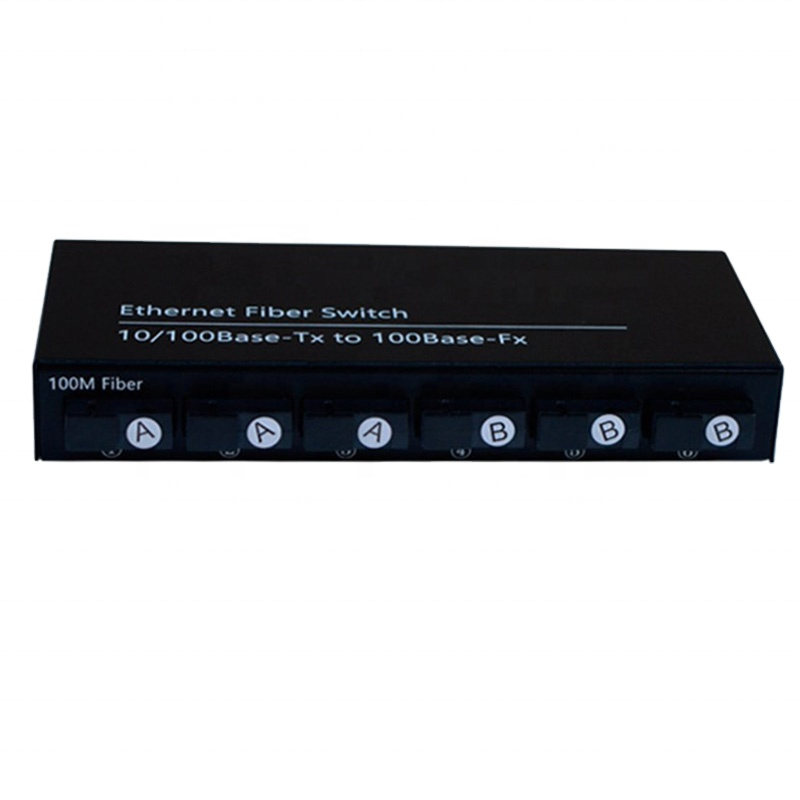
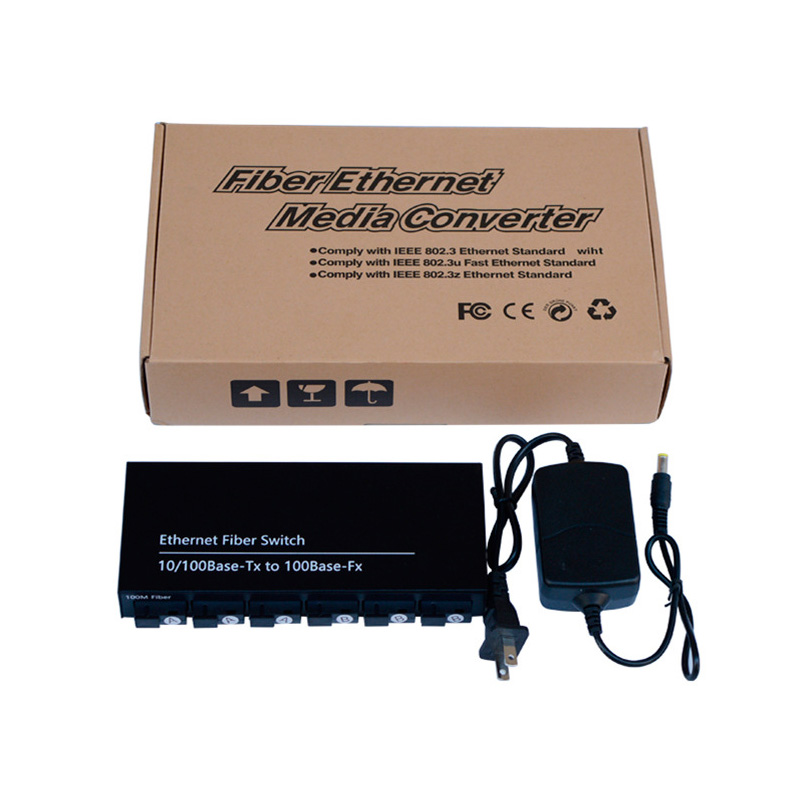
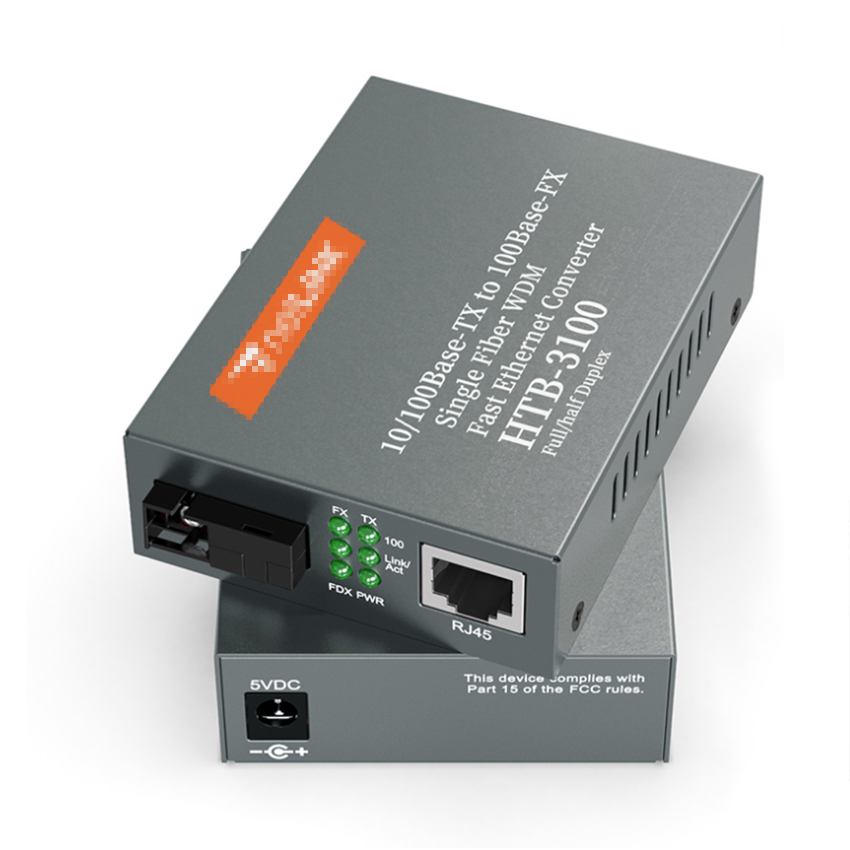
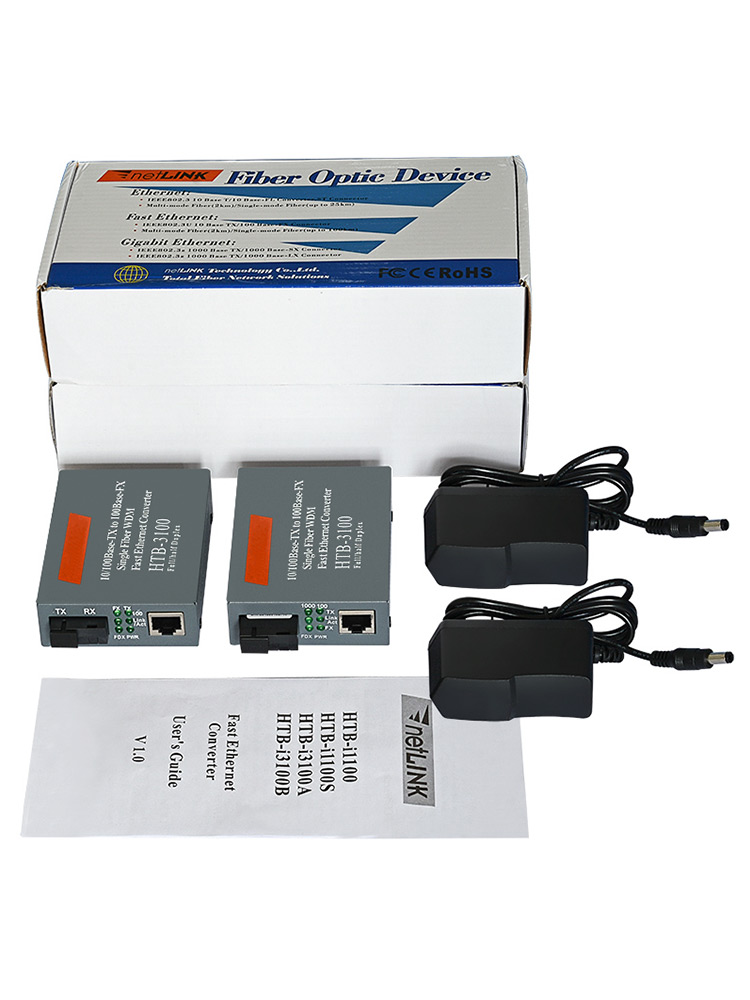
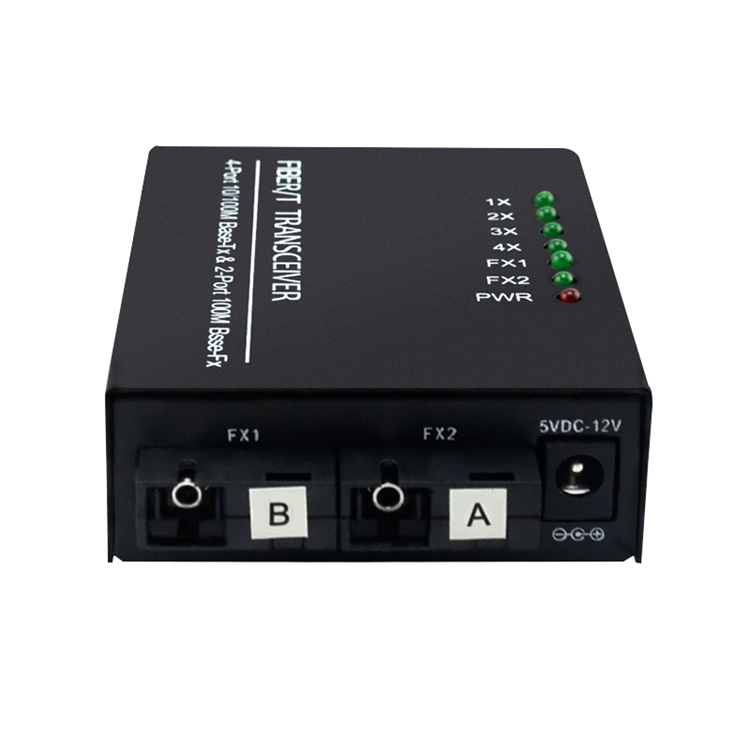
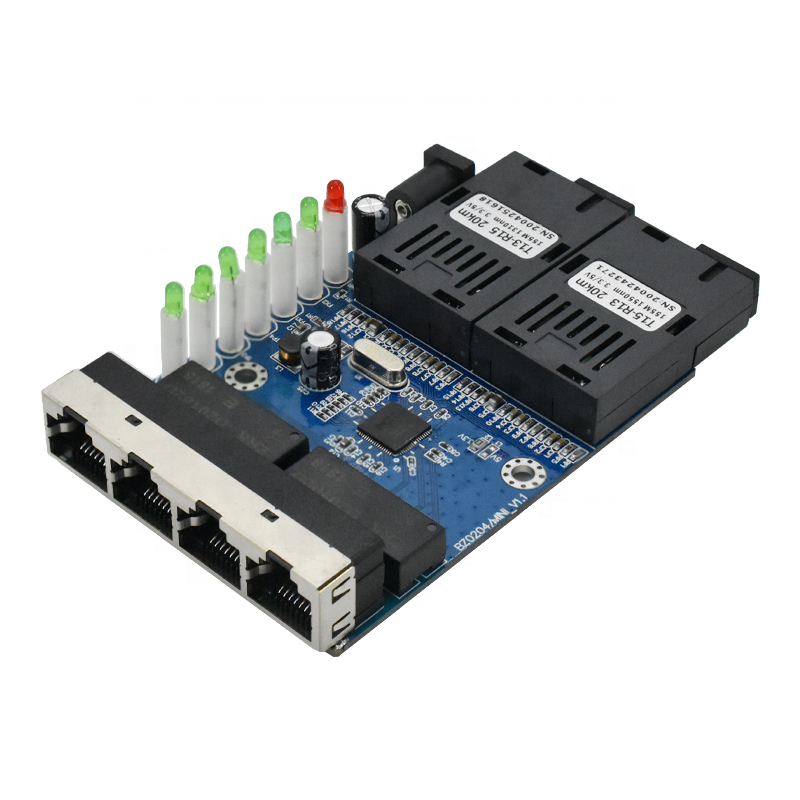
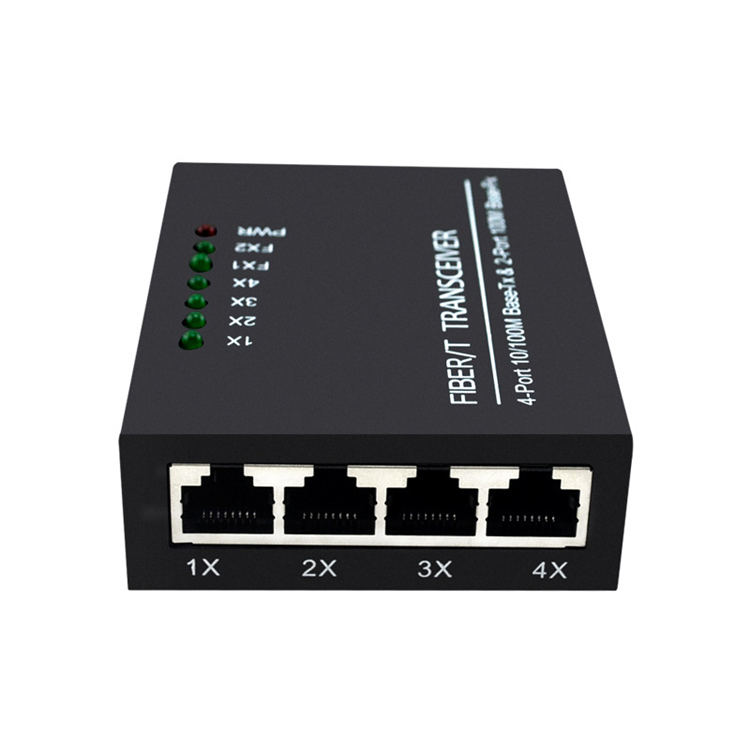
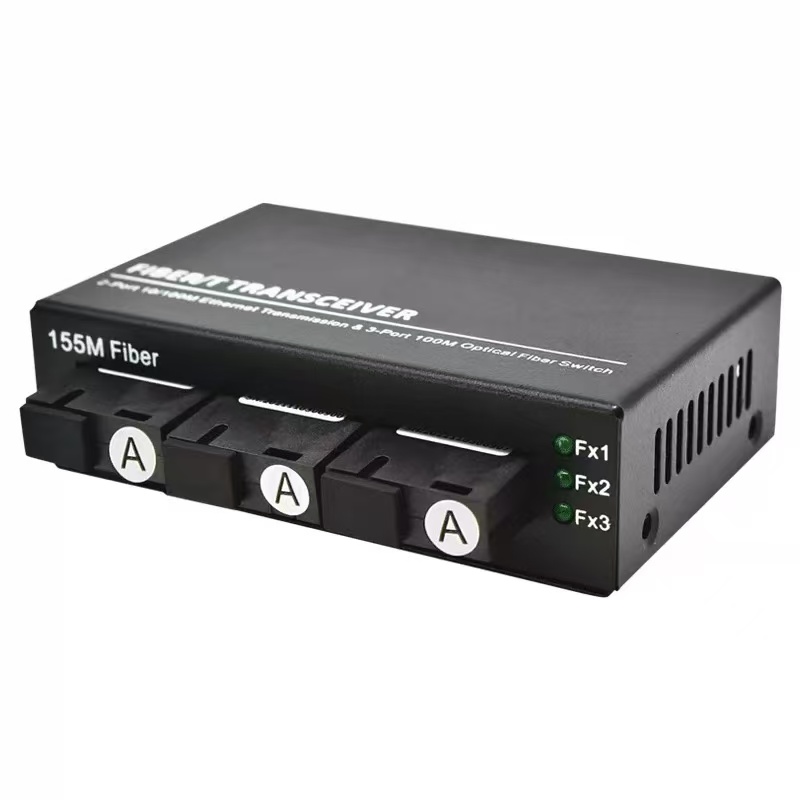
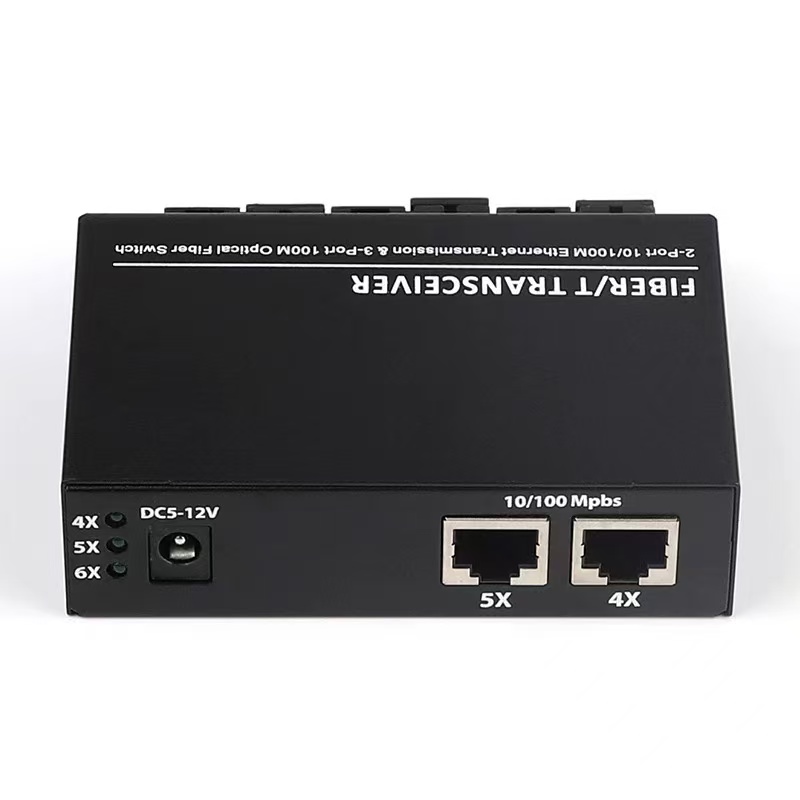
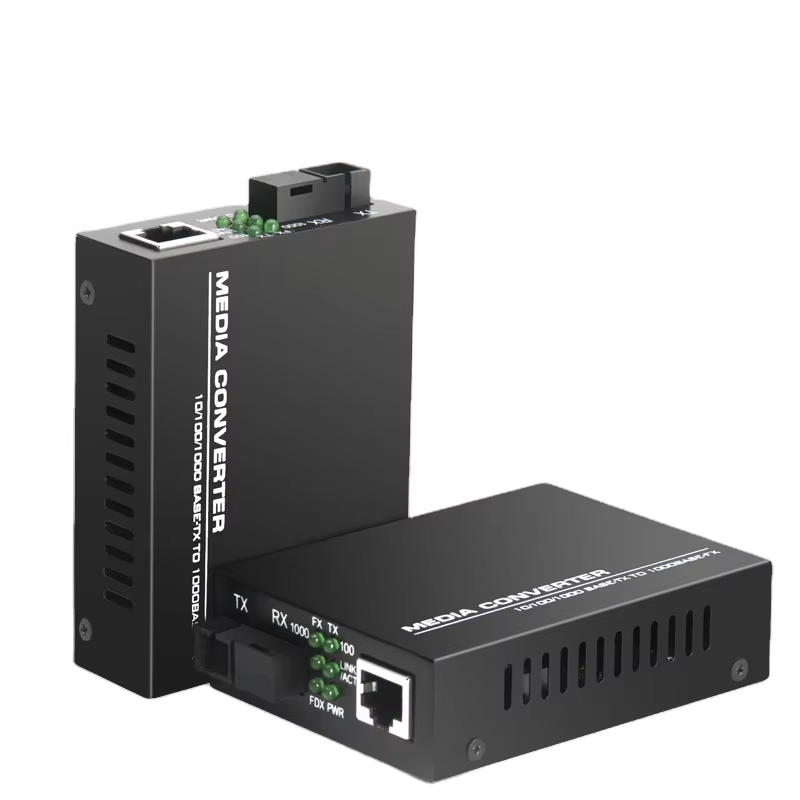
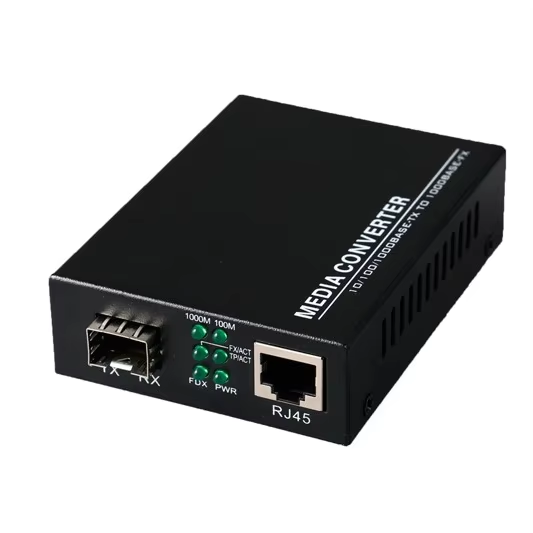
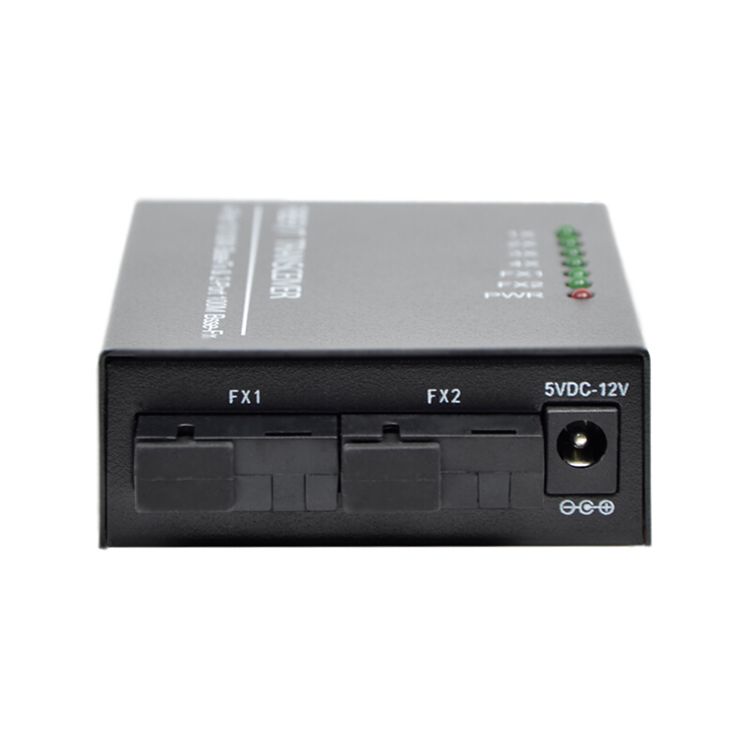
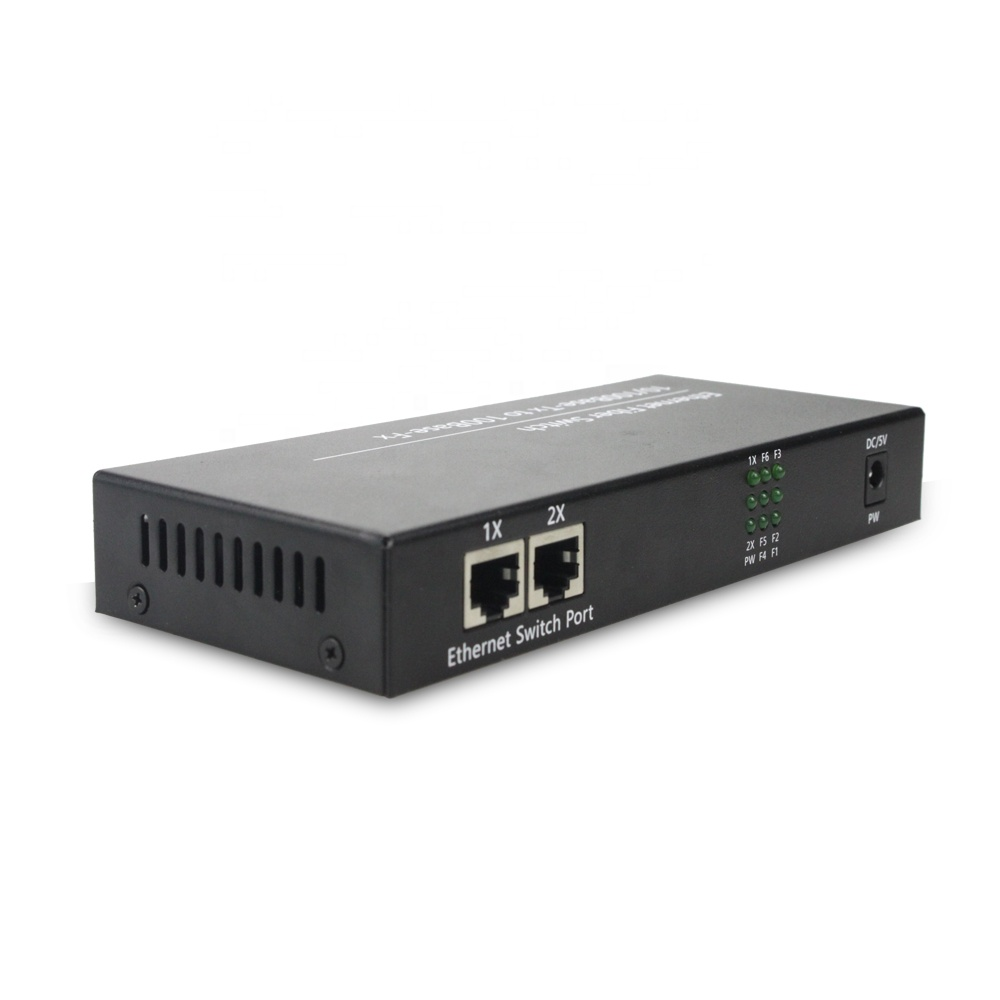
LF091 gigabit fiber media converter with RJ45 and optical ports for Ethernet network

LF091 Fiber Media Converter Series 10/100/1000M Single/Multi-mode OEM logo

Available Options / Customization

Port Configuration: HTB-3100AB, GS03, 2F4E, 3F2E, 6F2E, SFP

Speed: 100M, 1000M 

Fiber Type: SM/MM, dual-fiber or single-fiber

Optical Connector: SC, FC, ST, LC

OEM/ODM: Custom logo, packaging, color, labeling

Transmission Distance: 550m (multimode), 10km, 20km, 40km, 60km, 80km, 100km, 120km (single-mode)

Share on

Product Description

Fiber Media Converter and Ethernet Switch Series for Copper-to-Fiber Links

fiber media converter series extends Ethernet over single-mode or multimode fibre using fixed optical ports or SFP modules. The family includes 100M and gigabit 1-fibre/1-copper converters plus multi-port switching variants; model names are not interchangeable and the exact data rate, wavelength pair, connector, distance and power input must be locked before production.

Existing exposure terms—fiber media converter, gigabit, RJ45, SFP, SC, single-mode and multimode—are retained. Distance is an optical-budget result, not a stand-alone guarantee.

Series Selection Matrix

Decision

Options to confirm

Engineering impact

Ethernet rate

10/100M or 10/100/1000M

Both ends and all copper devices must support the required rate.

Fibre

Multimode or single-mode; dual-fibre or BiDi single-fibre

Determines wavelength, connector, distance and paired units.

Optical interface

Fixed SC/FC/LC or SFP cage

SFP version shifts optical specifications to the selected module.

Topology

1F1E converter or 2F4E/3F2E/6F2E switching variant

Port count, forwarding capacity and redundancy differ.

Power

External DC, built-in AC or project DC input

Confirm voltage, plug, polarity and surge environment.

Management/features

Unmanaged by default unless explicitly specified; LFP, VLAN, PoE, jumbo frame are model-dependent

Never infer features from enclosure or port count.

Single-Fiber BiDi Pairing

A single-fibre link requires complementary A/B units: the transmit wavelength at one end must equal the receive wavelength at the other. Confirm 1310/1550 or other specified pair, connector polish and link direction. Two identical BiDi units normally will not establish a link.

Technical Specifications and Series Comparison

Model

Fiber Ports

Copper Ports

Speed

Fiber Connector

Distance

Fiber Type

Wavelength

MAC Table

Power Supply

Dimensions (mm)

HTB-3100A/B

1

1

100M

SC/FC/ST

25~120km

SM simplex

1310/1550 (25-60km)

2K

External DC / optional built-in AC

26×70×93

1490/1550 (80-120km)


GS03

1

1

1000M

SC/FC/LC

10~100km

SM (dual-fiber or single-fiber)

1310/1550

2K

Built-in AC

140×110×30

2F4E

2

4

100M / 1000M (optional)

SC/FC/LC

MM 0.5km / SM 100km

SM/MM

850/1310/1550 optional

2K

Built-in / External DC

160×75×26

3F2E

3

2

100M / 1000M (optional)

SC/FC/LC

MM 0.5km / SM 100km

SM/MM

850/1310/1550 optional

2K

Built-in / External DC

160×75×26

6F2E

6

2

100M (10/100M auto-negotiation)

SC/FC/LC

MM 2km / SM 120km

SM/MM

1310/1550

4K

AC 180-260V or DC -48V / +24V / 44-58V

216×140×31

SFP pluggable

1 (SFP cage)

1

100M / 1000M (optional)

SC/LC

MM 0.5km / SM 120km

SM/MM

850/1310/1550

2K/4K

DC 3.3V (hot-swappable)

Module: 56.5×13.4×8.5

Enclosure size customizable


Optical Link Budget and Distance

Calculate margin from transmitter power, receiver sensitivity, fibre attenuation, connector/splice loss and ageing/repair allowance. A 20 km, 80 km or 120 km label represents a configured optical class under stated conditions; installed link quality and SFP/fixed-optics specification determine actual performance.

Ethernet Rate, Duplex and Auto-Negotiation

A gigabit converter does not increase the speed of a 100M camera or switch. Confirm copper auto-negotiation, duplex behaviour and any forced settings at both ends. For SFP models, verify module data rate, MSA compatibility, DOM requirement and permitted temperature range. LFP, jumbo-frame size, VLAN, PoE and managed functions are available only when listed on the exact datasheet.

Common Commissioning Failures and Prevention

Risk

Result

Control

BiDi A/B wavelengths not paired

No optical link

Match Tx/Rx wavelength pairs and connector polish.

100M unit in gigabit path

Throughput limited to Fast Ethernet

Approve rate on both ends and verify auto-negotiation.

Distance selected by label only

Unstable link or no margin

Calculate optical budget including fibre, connectors, splices and ageing margin.

SM/MM mismatch

High loss or modal problems

Match fibre type and wavelength to installed cabling.

Power-supply mismatch

Damage or intermittent reboot

Confirm input range, polarity, earthing and plug.

Unverified feature claim

Tender or commissioning failure

List LFP, jumbo frame, VLAN, PoE and management requirements per exact model.

Pre-shipment Quality and Acceptance Plan

LinkFiber can inspect exact model, port count, rate, wavelength, optical power, receiver response, connector, MAC learning, power input and labels. Project acceptance may add packet-loss/throughput testing, burn-in, link-flap recovery, power-cycle tests and paired BiDi verification.

  • Approve one complete A/B link or two-fibre pair.
  • Record rate, wavelength, connector, fibre type and distance class.
  • Verify copper link at the required speed and duplex.
  • Check every ordered power-supply option and plug.
  • Test multi-port models under simultaneous traffic where required.
  • Match SFP modules and feature claims to the exact model.

B2B Buyer Guide: Information Required for an Accurate Quote

Provide copper rate and port count, fibre count/type, connector, link length and loss, BiDi or dual-fibre topology, SFP or fixed optics, power input, operating environment, LFP/jumbo/PoE/management requirements, quantity, plug, label/logo and inspection documents.

MOQ, Samples, Lead Time and Packing

Commercial item

Standard B2B arrangement

MOQ

Project-based quantity; samples and trial orders available on request

Lead time

Normally 5–10 days after configuration confirmation

Packing

Protective bag/inner carton and export carton; project-specific packing available

Customization

Ports, adapters, trays, labels, logo, accessories, manual, inspection report and packing

Documents

Exact-model datasheet, packing list and lot inspection records; compliance evidence must match the supplied variant

Related Transmission Products

Compare the complete fiber media converter and Ethernet switch series and other Fiber Optic Transmission Equipment. LinkFiber can match paired converters, SFP modules, patch cords and power supplies under one configuration sheet.


FAQ
Q:

How to pair single-fiber converters?

A:
HTB-3100A (Tx1310nm / Rx1550nm) must be paired with HTB-3100B (Tx1550nm / Rx1310nm). Other single-fiber models (GS03 single-fiber, 2F4E single-fiber) follow the same wavelength matching principle.
Q:

How to choose between 100M and 1000M versions?

A:
For IP cameras (<100M) and budget-sensitive projects → 100M. For switches, servers, NAS, NVR, multi-HD streams → 1000M. 2F4E/3F2E/6F2E/SFP are available in either speed.
Q:

What are the advantages of SFP pluggable converters?

A:
Hot-swappable without powering down, interchangeable modules for different distances/wavelengths, increases port density, FCC/CE/RoHS certified – ideal for data centers and flexible maintenance.
Q:

What makes 6SC2RJ unique?

A:
6F2E is the only model explicitly supporting IEEE802.1Q VLAN and broadcast storm protection, plus industrial power inputs (-48V / +24V / 44-58V DC) and a 4K MAC table. Ideal for multi-service isolation and industrial communication.
Q:

What is the difference between 2F4E/3F2E/6F2E and ordinary media converters?

A:
These models have a built-in 12Gbps switching core and backplane bandwidth – they function as mini switches, not just simple optical-electrical converters.

Q:

How does the "simplex" (single-fiber) technology in HTB-3100A/B reduce fiber optic cabling costs?

A:
The HTB-3100A/B uses WDM (Wavelength Division Multiplexing) to transmit and receive data over a single fiber strand (e.g., 1310nm / 1550nm). Compared to traditional dual‑fiber converters, it cuts the required fiber core count by half. For long‑distance links (up to 120km) or scenarios with limited fiber availability, this can reduce cable material costs by approximately 50% while doubling the utilization of existing fiber infrastructure.
Inquiry

To learn more about this product, you can submit your requirements here.

Send Inquiry Now
Recommended Products