

Inside LinkFiber’s 8-Step Precision Manufacturing and Logistics Cost-Saving Strategy
Custom-length A2 drop cable is G.657A2 fibre drop cable prepared to the installation length and connector configuration specified by the buyer. LinkFiber combines controlled connector assembly with compact coil packing to help FTTH distributors, contractors and telecom project buyers manage product quality, installation work and shipping volume.
When A2 fibre costs rise, overseas buyers have to balance material availability, delivery schedules and margin. At LinkFiber, growing demand for our custom-length drop cable reflects a practical combination: bulk-stock availability, competitive factory quotations, a defined manufacturing process and packing designed around the customer's delivery requirements.
Our production experience includes supply for China Mobile projects. Each new order is still assessed against its own approved specification, acceptance criteria and documentation requirements. Buyers can request samples and the agreed batch test reports before committing to a repeat supply programme.
Pre-Cut Drop Cable Production & Packing Flow
Follow the custom-length preparation, compact 15 cm coiling and connector assembly stages below. The coil comparison illustrates our compact packing approach. Click any photo to enlarge.
Step 1 Customize Length →
Step 2 Pack Comparison: ours 15cm →
Step 3 · Parts Fitting →
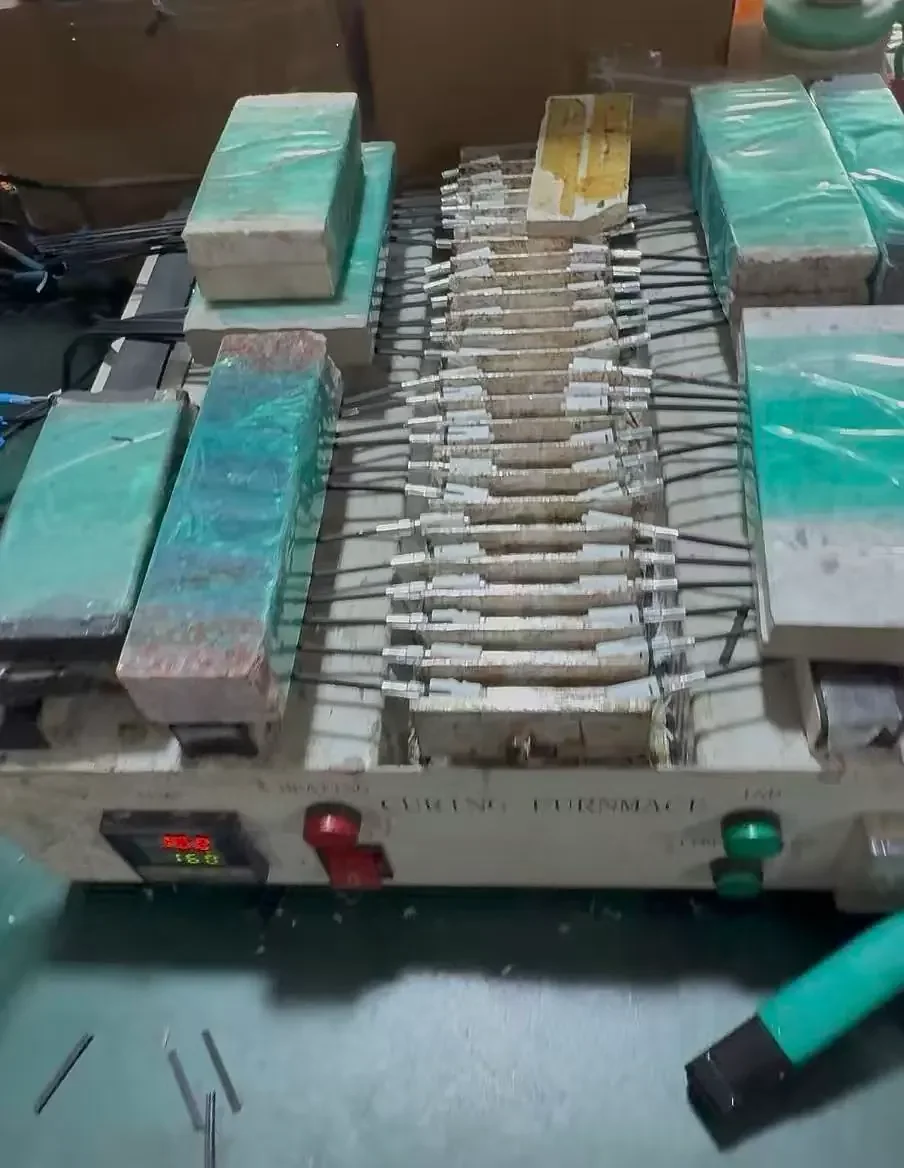
Step 4 · Epoxy Curing ↓
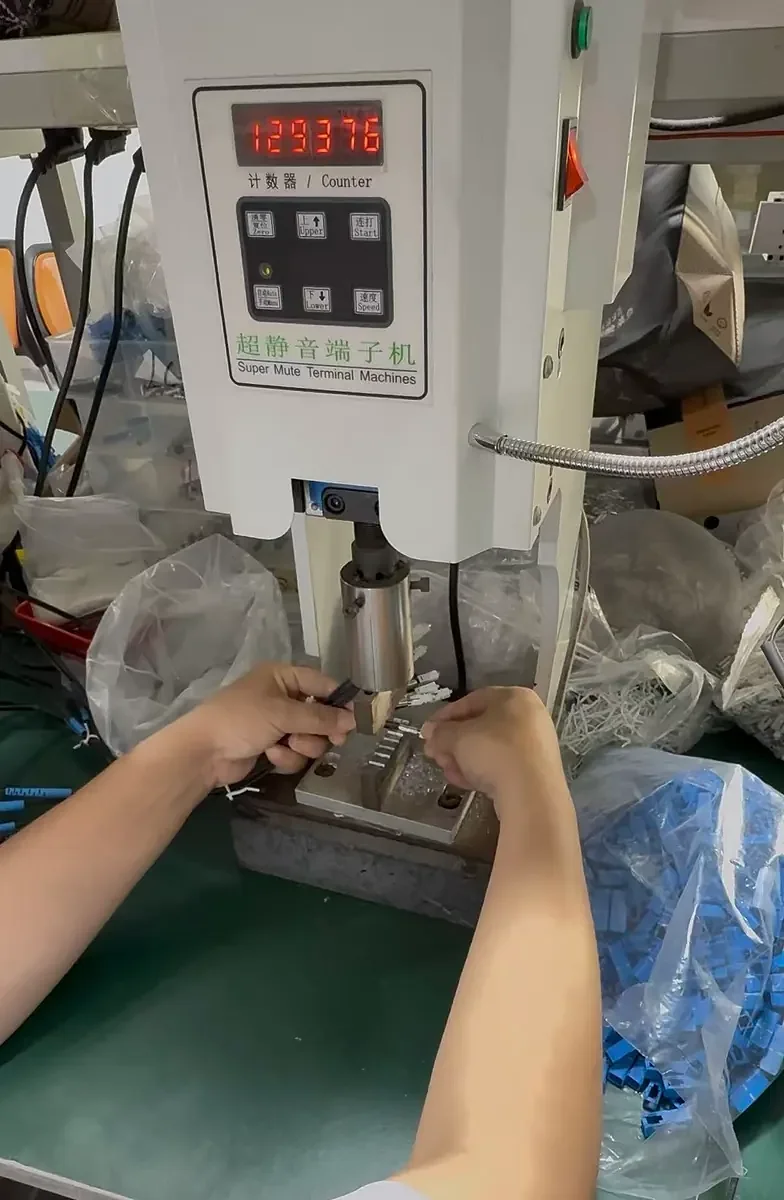
Step 5 · Crimping →
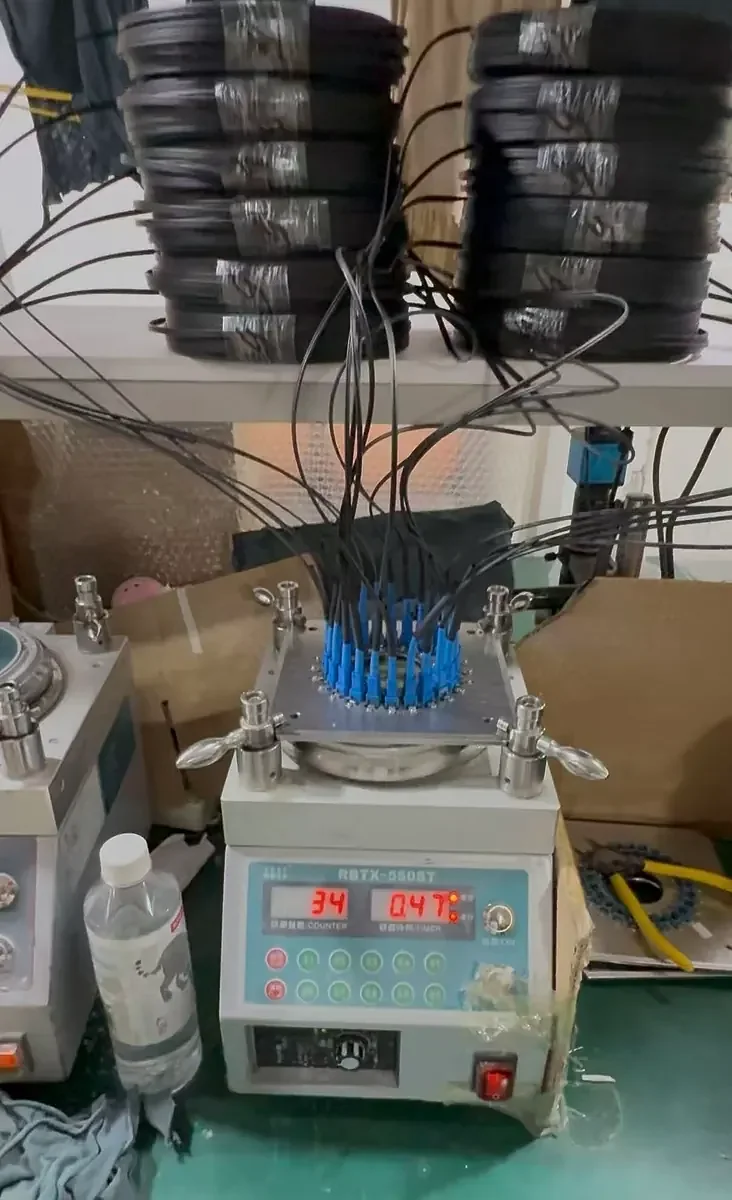
Step 6 · Polishing →
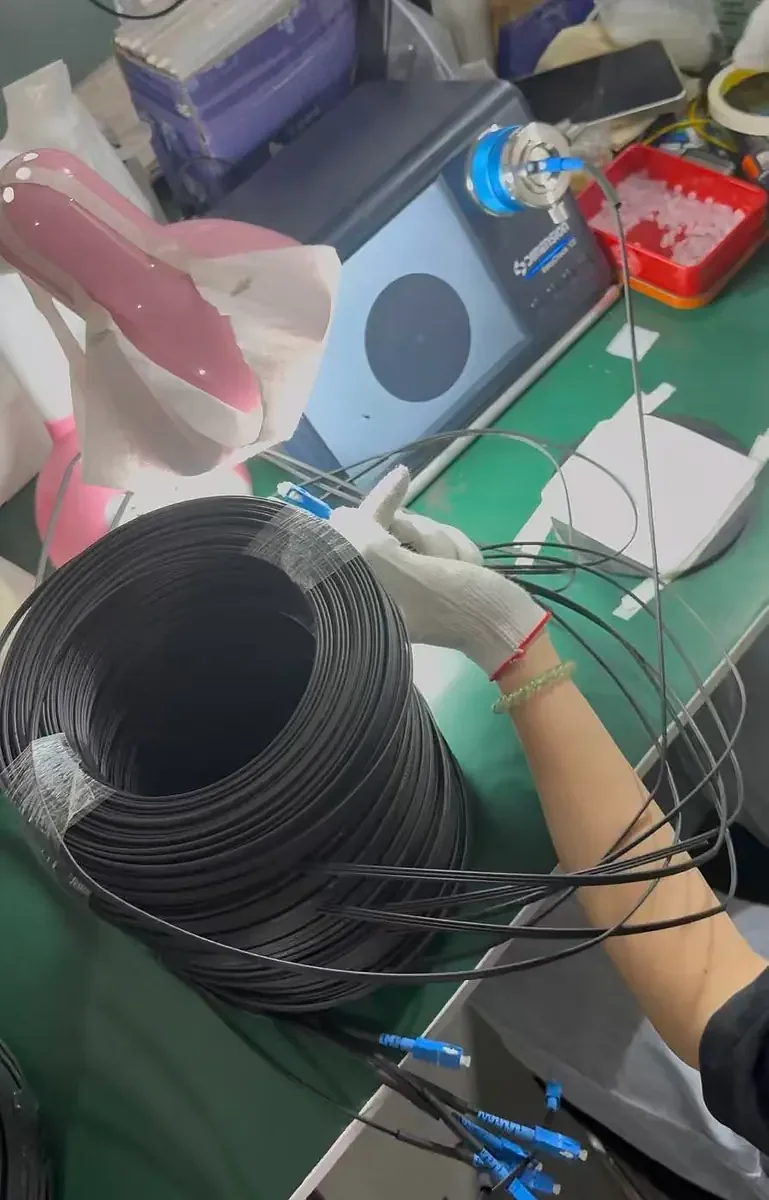
Step 7 · VFL Check →
Step 8 · Export Packing ✓
The 8-Step Manufacturing Process Behind Our A2 Pre-Cut Drop Cable
Step 1: Custom-Length Precision Cutting
We cut bulk drop cable to the customer's specified finished lengths. Agreeing the length schedule in advance helps reduce unnecessary offcuts and on-site preparation. The purchase order should define the measurement convention, length tolerance, core count and quantity for each length.
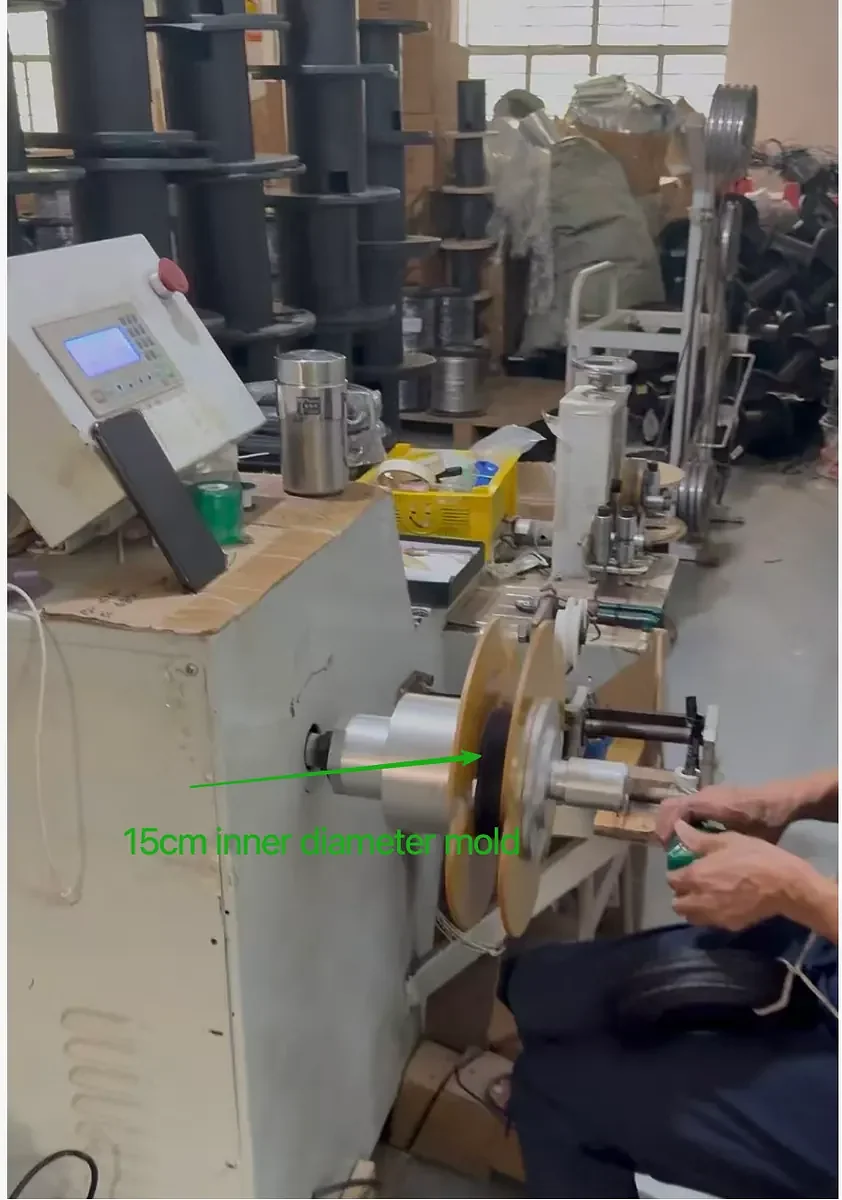
Step 2: A Dedicated 15 cm Winding Mold and Initial Coil Packing
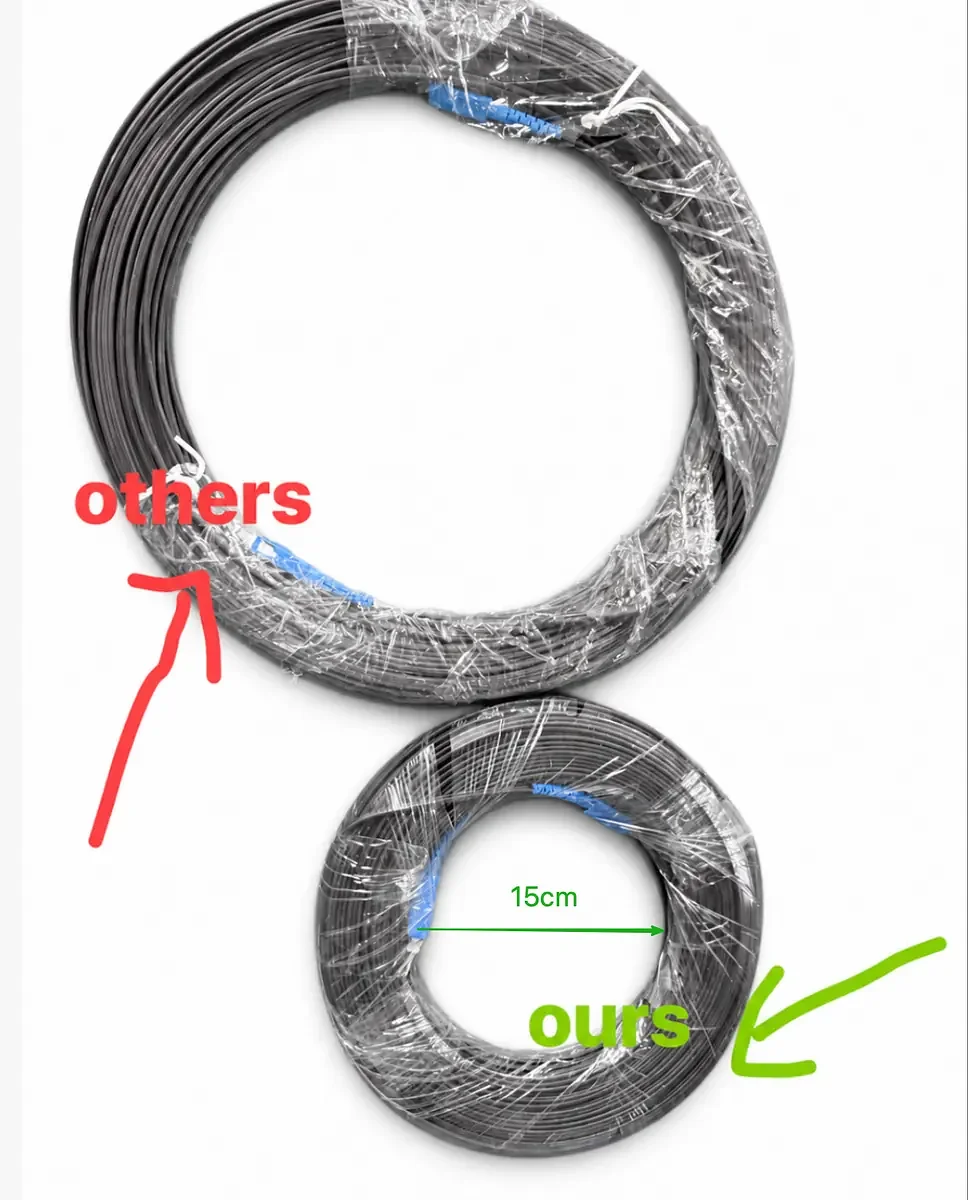
Our winding station uses a dedicated mold with a 15 cm inner diameter. It creates a compact centre opening compared with the larger coil shown in our packing comparison. This measurement describes the inside opening, rather than the finished coil outside diameter or carton dimensions. Packing must remain compatible with the selected cable's bend limits.
Our reported packing comparison: for the same cable length and comparable construction, LinkFiber reports up to 34% lower packed volume using its compact packing approach. Ask for the baseline, finished coil dimensions and carton or pallet layout for your order. This is a packing-volume comparison; the actual freight charge depends on weight, shipment dimensions, route and carrier pricing.
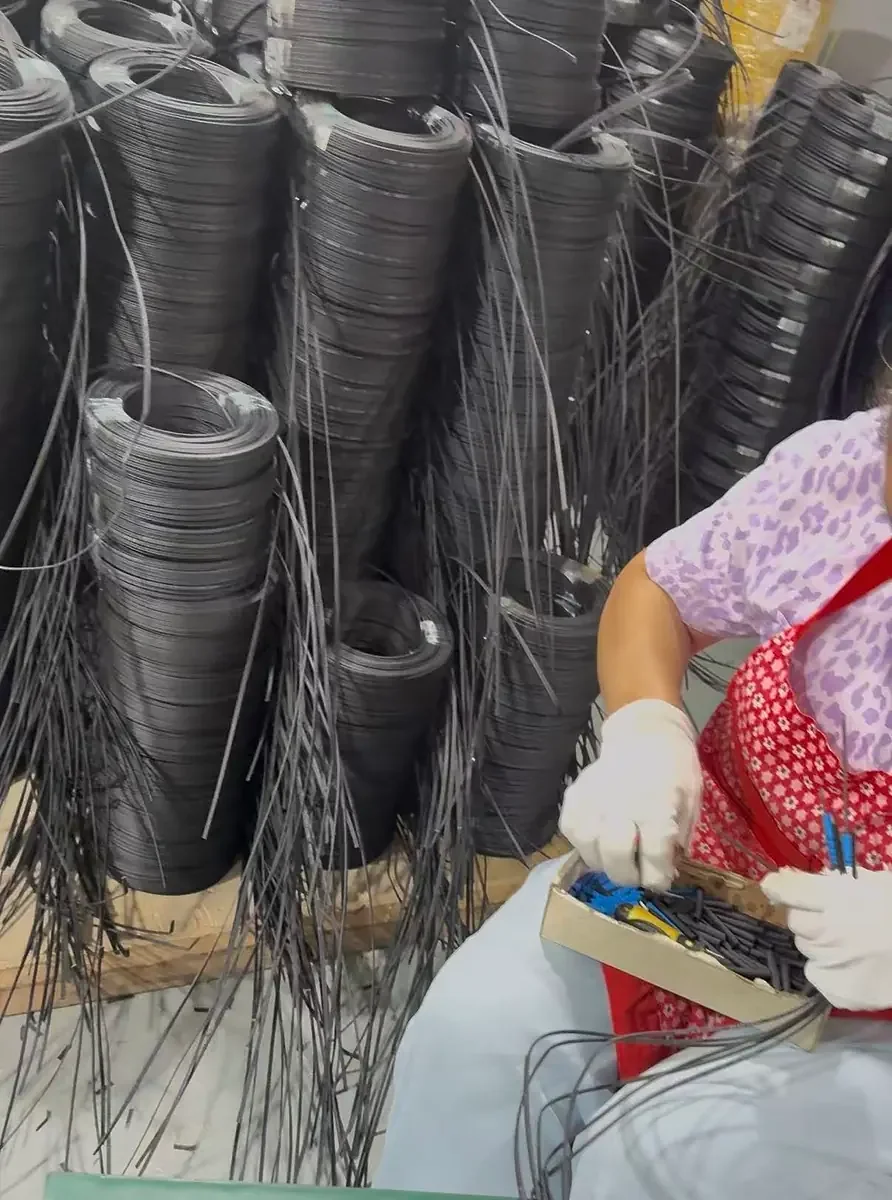
Step 3: Steel-Wire Preparation and Protective Component Installation
For the specified steel-reinforced assembly, we cut back the main steel wire approximately 30 cm from the cable end and fit the black protective sleeve, connector protection and the required UPC or APC connector components. The exact preparation follows the approved construction. Preparing these components in the factory can simplify handling at the installation site.
Step 4: Epoxy Curing in a Controlled Furnace
The prepared ferrule assemblies undergo the specified heated curing step, with a stated process time of 4–5 minutes. Epoxy holds the fibre within the ceramic ferrule after curing. The adhesive, temperature profile and curing time follow the approved manufacturing process; the photograph shows the curing fixture rather than a product temperature rating.
Step 5: Mechanical Crimping for Cable Retention
We mechanically crimp the connector assembly as part of its cable-retention and strain-relief design. This step serves a different purpose from the epoxy bond within the ferrule. For procurement, compare the actual connector construction and agreed tensile-test criteria, rather than judging two quotations on price alone. We recommend retaining this step in private-label assemblies where the approved design requires it.
Step 6: Four-Stage Connector End-Face Polishing
After fitting the outer components, the connector ends pass through four polishing stages: adhesive removal, coarse polishing, fine polishing and silica finishing. Controlled end-face preparation supports the optical performance of the finished connector. Numerical insertion-loss and return-loss limits must be defined and verified for the ordered grade.
Step 7: End-Face Cleaning and 100% VFL Light-Pass Inspection
Technicians clean the connector ends and carry out a 100% VFL light-pass inspection as part of our stated workflow. Assemblies with suspect results are returned for investigation and rework at the relevant process stage.
A VFL check helps assess continuity and visible faults. It does not measure insertion loss or return loss, and a bright transmitted point alone does not certify compliance with an optical acceptance limit. Specify those measurements, the wavelengths, test coverage and batch-report format separately.
Step 8: Compact Protective Wrapping and Final Packing Checks
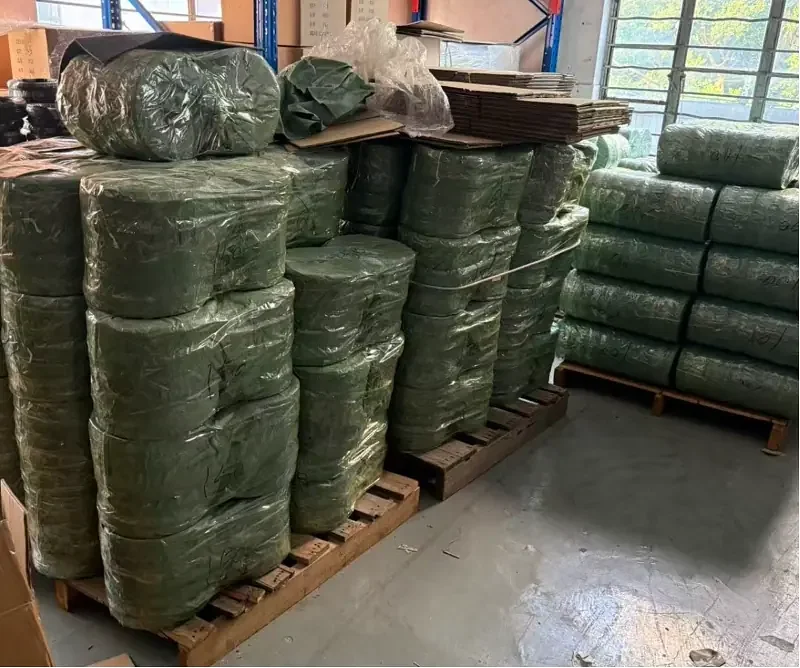
Coils receive protective wrapping and are grouped according to the agreed export-packing plan. We check the cable length and quantity schedule, connector protection, identification and package condition before dispatch. The 15 cm inner-diameter approach is intended to reduce unused packing space while keeping the specified cable protected in transit.
Why FTTH Buyers Choose LinkFiber
- Defined production controls: a documented sequence from length preparation to connector finishing and inspection, with samples and agreed batch reports available for approval.
- Competitive volume quotations: options for 1-core, 2-core and 4-core G.657A2 drop cable, subject to the confirmed construction and order schedule.
- Compact packing: a dedicated 15 cm inner-diameter winding mold, with order-specific packed dimensions available for logistics comparison.
- Stock and delivery planning: bulk-stock availability and the production schedule are confirmed against the requested lengths, connector configuration and quantity.
The goal is to help you deliver a consistent assembly to your own customers while keeping the complete landed-cost calculation visible: product, packing, freight and on-site work.
What B2B Buyers Should Confirm Before Ordering
- Fibre grade: specify G.657A2 explicitly. ITU-T G.657 (2024) is the technical reference for bending-loss-insensitive single-mode fibre and cable; it does not certify the freight-saving percentage.
- Connector interface: confirm SC UPC or SC APC at each end. Match the existing network interface and avoid mating UPC directly to APC.
- Mechanical construction: confirm the steel-wire or FRP reinforcement, cable structure and jacket required by the route.
- Acceptance and reporting: agree optical limits, wavelengths, mechanical tests, inspection coverage, sample approval and the batch-report template.
- Packing comparison: compare equal cable length, construction and total quantity. Calculate shipment CBM or pallet dimensions in metres: length × width × height × package quantity.
Request a Sample and Let's win-win!
Send your specification to LinkFiber so we can match the assembly and packing to your project. Configurations requiring engineering review may need further confirmation.
- Core count: 1 core / 2 cores / 4 cores.
- Reinforcement: three steel wires / FRP strength members, with the required construction drawing.
- Order schedule: custom length, quantity for each length.
- Connector: connector type, UPC/APC polish.
- Delivery: destination, shipment terms or pallet requirements.
Samples are available for approval. Confirm sample eligibility, courier charges and the required factory test-report scope with the team. If the specification is still being developed, send your application and request the current catalogue.
LinkFiber Team will reply within 12 hours. We look forward to a win-win partnership with you!